Thursday, 29 July 2010

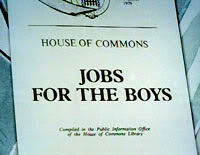
'Boy' George Osborne: Trident costs to come from Defence budget

George Osborne delivered a rebuke to the defence secretary, Liam Fox, when he declared that the costs of Britain's new Trident nuclear deterrent will come from the main defence budget.

In a sign of the Tory's leadership's growing impatience with Fox, who has embarked on what Downing Street sources have dubbed as "freelance" missions, the chancellor said there could be no special accountancy exemptions for the defence budget.

Speaking to Bloomberg in New Delhi, Osborne said: "The Trident costs, I have made it absolutely clear, are part of the defence budget. All budgets have pressure. I don't think there's anything particularly unique about the ministry of defence. I have made it very clear that Trident renewal costs must be taken as part of the defence budget."

The chancellor's blunt remarks will be seen as something of a reprimand for Fox who complained recently that his department was being asked to pay the £20bn costs of replacing Trident. Fox believes that the costs of replacing Trident should come directly from the Treasury because Britain's continuous-at-sea defence is a matter of national security.
Read More Here

This will come as a blow to those who were optimistic in the fact that the MoD as a department was only being asked to find 20-25% savings over the coming years compared to 30-40% in most other departments. When Trident is factored in (£1 to £2 billion a year) and the suggestion that all the MoD's savings will come from non-service areas... it seems likely that MoD civil servants might well face real cuts of between 30 & 40% over the coming two or three years!

Wednesday, 28 July 2010

Civil servants 'treading water' with no job to do

- because it's too expensive to make them redundant! Read More Here


Mr Maude told the Public Administration Select Committee that current arrangements make it 'prohibitively expensive' to offer redundancy to some civil servants, leaving them 'in limbo'. 'In most departments there are people for whom there is no job,’ he said.

Francis Maude you will remember famously claimed almost £35,000 in two years for mortgage interest payments on a London flat when he owned a house just a few hundred yards away. He owned the house outright but in 2006 took out a £345,000 mortgage on the flat about one minute’s walk away. He then rented out the house and began claiming mortgage interest payments on the flat which is in a grade II listed building with a gym and 24-hour concierge.
Mr Maude also claimed, and was paid, £387.50 for the cost of moving his effects down the road from the house to the flat.

He claimed £18,112.50 in mortgage interest payments for the year 2006-07, £1,790 for council tax, £2,237 for a service charge and £820 for cleaning.

A further £9,801.78 was claimed for mortgage interest payments from April 1 to Aug 31, 2007.
The senior Tory MP then submitted a claim for the mortgage interest payments for the remainder of the 2007-08 financial year, which came to £13,070.96.

In a note to the House of Commons fees office he said he knew there was not enough left in his ACA account to cover the payments.

The fees office paid out £6,748.52, up to the maximum of his allowance.

The 55-year-old MP is independently wealthy. He was previously a managing director of Morgan Stanley, a director of Salomon Brothers and a non-executive director of Asda during the 1990s.

Tuesday, 27 July 2010

Quangos a go-go

David Cameron vowed in opposition to rein in Britain's quango state in an attack on a bloated public sector.

His threatened cull of taxpayer-funded organisations yesterday became reality for thousands of workers as the Health Secretary, Andrew Lansley, announced that half of the "arms-length bodies" run by his department were to be abolished.

The move to scrap such quangos as the Health Protection Agency provoked anger among nurses and doctors' organisations, which warned that public wellbeing would suffer as a result.

To date, the coalition Government has axed at least 80 quangos and warned many others that they faced mergers or deep cuts.

All of these will result in job losses across the country and could have huge impacts upon public health, welfare and culture.

ABOLISHED SO FAR

ARTS
*UK Film Council
*Museums, Libraries and Archives Council
*Advisory Council on Libraries
*Legal Deposit Advisory Panel
*Advisory Committee on Historic Wreck S ites

HEALTH
*Health Protection Agency (HPA)
*National Patient Safety Agency (NPSA)
*National Treatment Agency for Substance Misuse
*Alcohol Education and Research Council
*Appointments Commission (CQC)
*Human Fertilisation and Embryology Authority (by end of this Parliament)
*Human Tissue Authority
*Council for Healthcare Regulatory Excellence (to be made a self-funding body by charging a levy on regulators)
*NHS Institute for Innovation and Improvement

EDUCATION
*General Teaching Council
*Qualifications and Curriculum Development Agency
*British Educational Communications and Technology Agency (BECTA)

BUSINESS AND ECONOMY
*All eight regional Government Offices: South-West, South-East, East Midlands, West Midlands, East of England, North-West, Yorkshire & the Humber and North-East
*Eight out of the nine regional development agencies (the exception being London) and some of their local subsidiaries: Advantage West Midlands, East Midlands Development Agency, Yorkshire Forward, South-West Regional Development Agency, South-East England Development Agency, East of England Development Agency, North-West Regional Development Agency, One North-East
*Strategic Advisory Board for Intellectual Property policy (SABIP)
*SITPRO (Simplifying International Trade)
*Waste Electrical and Electronic Equipment Advisory Body (WAB)
*British Shipbuilders Corporation
*UfI/Learndirect
*Learning & Skills Improvement Service
*Institute for Learning *Standards and Verification UK
*IiP UK
*Hearing Aid Council
*Investors in People UK

HOME OFFICE
*National Policing Improvement Agency

ENVIRONMENT
*Sustainable Development Commission (funding withdrawn)
*Royal Commission on Environmental Pollution
*Agricultural Wages Board, the 15 Agricultural Wages Committees, the 16 Agricultural Dwelling House Advisory Committees and the Committee on Agricultural Valuation
*Inland Waterways Advisory Council
*The Commons Commissioners
*Infrastructure Planning Commission
*Commission for Rural Communities

MERGED

ARTS AND SPORT
*UK Sport and Sport England
*National Lottery Commission with the Gambling Commission

UNDER THREAT

ARTS
*Commission for Architecture and the Built Environment, English Heritage, Heritage Lottery Fund, National Heritage Memorial Fund – could be merged
*Advisory Committee on National Historic Ships (declassified, functions transferred to another body)
*Theatres Trust (declassified, so can act as an independent statutory advisory body)
*Churches Conservation Trust (could be declassified, pending talks with the Church of England) *Visit England and Visit Britain (status, role and functions will change)
*Design Council (under review)

BUSINESS
*Local Better Regulation Office
*ACAS (Advisory, Conciliation and Arbitration Service)
*Local Better Regulation Office
*Ofcom (in the short term it is losing its policy making power)
FOOD
*Food Standards Agency (its responsibilities have been much reduced)

ENVIRONMENT
*Carbon Trust (could be merged into new UK Green Investment Bank)
EDUCATION
*Partnership for Schools (school-building)
*Training and Development Agency (was facing the axe, but may now be spared)
SOCIETY
*Children's Commissioner for England – under review
*Equality and Human Rights Commission – has been accused of wastefulness by Home Secretary and faces further cuts

Auditors refuse to sign off MoD accounts

National Audit Office says 'systemic' problems mean defence ministry is unable to account for £6bn of equipment

The National Audit Office today refused to sign off the Ministry of Defence's annual accounts, for the fourth year in a row.


The spending watchdog said the MoD was unable to account properly for more than £6bn of equipment. The head of the audit office, Amyas Morse, said that despite efforts by the MoD to tackle the issue, there remained "systemic and deep-rooted" problems with its asset management system.

He said it had emerged that the problems were more extensive than previously thought as the work done to track down the equipment brought fresh difficulties to light.

The NAO found the MoD was unable to account for the whereabouts of £5.5bn of spares and other stocks, and £752m of military equipment, including firearms and 5,961 Bowman radios worth £184m.

"Despite action by the department to improve its asset management and accounting, the issues I have identified are systemic and deep-rooted," Mr Morse said. "The level of control exercised by the department is not yet sufficient to enable me to provide an opinion on a significant proportion of assets reported in the financial statements."

The MoD said that the issues raised by the NAO had no impact on the provision of essential equipment to frontline troops. "The National Audit Office has recognised that the MoD has improved procedures for inventory management and, by the end of March this year, had completed a full reconciliation of Bowman radios," a spokesman said. "We are continuing to work hard to improve our inventory management and ensure our accounting systems become compliant with financial reporting standards, but recognise that both issues will take time to be rectified."

DIY Police?

Cameron's answer to budget cuts: get public involved in 'DIY' policing

David Cameron's "big society in action" answer to police budget cuts has been revealed as a plan to appeal to the public to take part in "do-it-yourself" policing ‑ and perhaps even go on patrol with uniformed officers.

A radical police reform white paper published by the home secretary, Theresa May, says that she wants to explore new ideas including creating a reserve army of volunteers prepared to act as community crime fighters along similar lines to fire reservists who help staff some neighbourhood fire stations.

The idea for greater public involvement in policing emerged as the home secretary's Liberal Democrat coalition partners warned that the current state of her proposals to introduce directly-elected police and crime commissioners are in danger of giving a green light to "Judge Dredd populists".

Given that we are all also expected ("Call Me Dave" and Boy George Osborne" etal exempted of course) under the "big society in action" to volutarily cut the verges, clear the litter, run the schools, nurse the sick, care for the infirm... it does beg the question, when will we be able to find the time to do all this voluntary work?

Presumably when we are unemployed!

Saturday, 17 July 2010

The Gravy Train.

Civil servants find lucrative roles in private sector

The predicted explosion in the public services market will see a stream of top civil servants and managers being offered lucrative packages to join private outsourcing companies competing for government business.

Some of these will have been instrumental in drawing up government policy and providing advice to ministers. Many who have gone already have been accompanied by their ministerial bosses.

Ministers who have taken paid non-executive positions in the private health sector include Milburn, who became an adviser to Bridgepoint, a private equity firm specialising in healthcare investments. Patricia Hewitt, health secretary 2005-07, became an adviser to Cinven, a private hospitals group. And Lord Warner, a health minister 2003-2007, became chairman of the government sector advisory panel for Xansa, which provides business and accounting services to the NHS.

The former top civil servant Sir Bruce Liddington, once in charge of Labour's academy schools programme under Tony Blair left the Department for Education in January 2009 to become the £250,000-a-year director of E-Act, a social enterprise and registered charity which operates eight academy schools funded with £50m of public money. It has plans to develop five more academies. The one-time head teacher was accused earlier this year of enjoying a "culture of excess" after he claimed thousands of pounds for stays in luxury hotels and taxi hire to visit academies around the country. E-Act said Liddington repaid the money and denied he used limousines.

Friday, 16 July 2010

Remember the promises from 'Call Me' Dave?

Dave: "Let me say clearly to any pensioner... you are getting letters from Labour to say that we would cut the winter fuel allowance, free bus travel and free TV licence. These statements are simply lies, I don't use that word often, but I am today because they are lies." Press Conference, 23 March 2010

Dave: "We will keep the free TV licence, the winter fuel allowance, the free bus pass. Those leaflets you have been getting from Labour, the letters you have been getting from Labour are pure and simple lies." Leaders debate, 22 April 2010

In todays Mail, read the following:

"Now wait five more years to get your bus pass: Millions face means test to get free travel"

Thursday, 15 July 2010

Britain’s debt: The untold story

The true scale of Britain's national indebtedness was laid bare by the Office for National Statistics yesterday: almost £4 trillion, or £4,000bn, about four times higher than previously acknowledged.

It quantifies the burden that will be placed on future generations, and it is the ONS's first attempt to draw together the "off-balance-sheet" liabilities that have been accumulated by the state. The figures imply a huge "intergenerational transfer" – broadly in favour of today's "baby boomer" generation at the expense of younger people and future generations.

The debt primarily consists of the cost of public sector and state pensions, and of payments promised to private contractors under private finance initiatives. It far exceeds any of the figures so far published for the national debt, the largest current estimate for which is £903bn. That is projected to rise to £1.3trn by 2015.

If the current generation of taxpayers wanted to remove the higher bills facing their children and grandchildren, they would now be paying around 30 per cent more in tax.

The ONS data strengthens the Government's hand in its attempt to pull down state spending.

The ONS itemised the public sector's main liabilities as:

* Future payments for the state old age pension: £1.1trn to £1.4trn
* Unfunded public sector pensions for teachers, NHS staff and civil servants: £770bn to £1.2trn
* Payments under private finance initiative contracts: £200bn
* Contingent liabilities (eg bank deposit guarantees): £500bn
* Nuclear power plant decommissioning: £45bn
* Impact of financial sector interventions: £1trn to £1.5trn

Leaving aside the possibility of another financial meltdown that would leave the taxpayer with the liabilities of a substantial part of the banking system, the figures suggest that the realistic total liabilities of the public sector could be as much as £3.8trn (£3,800,000,000,000).

Read More Here

Tuesday, 13 July 2010

Civil Service Compensation Scheme

The coalition government has announced plans to introduce new legislation to cap redundancy payments for civil servants and

It is crucial that we continue to keep up the political pressure in the campaign. We are calling on all members and supporters to ask their local MPs to sign EDM 301 and to also ask the Cabinet Office Minister the Rt Hon Francis Maude MP to urgently enter into new negotiations on the CSCS.

Please email your MP and ask for their support in our campaign: www.pcs.org.uk/cscseaction

Sunday, 11 July 2010

How can civil service cuts be blamed on union court action?

Despite Francis Maude's weasel words, the Tories would almost certainly have attacked civil service redundancy terms anyway

Mark Serwotka in the Guardian today.

The logic of claiming, as Daniel Calder does, that Francis Maude would not have had to trump the previous government's cuts to civil service redundancy were it not for me, is hard to follow.

The argument seems to go that my union, the Public and Commercial Services union (PCS), is at fault for proving twice in the high court that it was unlawful for the government to rip up the contracts of its staff without their agreement.

The ruling means the government should not have imposed the changes. But, under the cover of demonising PCS for successfully defending its members' interests in court, this is precisely what Maude's coalition now plans to do.

The government is unique as an employer – no other boss would be able to make new laws simply because the existing ones make it impossible to impose its will on its staff. But the article appears to suggest that this is an acceptable way to conduct industrial relations. Well, I find the idea of that utterly abhorrent and, in fact, it makes having strong unions in the civil service doubly important.

So the real question is, why are the Tories' proposals so much worse than the previous government's if Maude truly believes that his actions "might not have been necessary" were it not for our court victory?

The weasel word gives it away. It only "might" not have been necessary. But given the Tories have long said civil service redundancy terms should be brought more into line with the private sector, it is almost a certainty that they would have done this anyway.

Yes, the Tories' plans are an absolute disgrace. But if cuts to contractual rights are wrong under the Tories, they were wrong under Labour.

I accept there is some anger out there, but let us turn it into opposition against this coalition government, which has wasted no time in setting about realising an ideological ambition of the old Tory right to dismantle the welfare state piece by piece. This time, however, it is not doing it from the position of strength enjoyed by previous Tory governments. It is being held in power with the supine support of the Liberal Democrats, who once opposed many of the measures they now apparently believe are necessary.

To help it in its task, this "fair and progressive" coalition intends to rip up the contracts of its workforce and use its privileged position as legislator and executive to force staff to bend to its will. PCS, as a union, says quite simply and logically that it shouldn't be allowed to get away with it.

Tuesday, 6 July 2010

Redundancy pay to be capped 'as soon as possible'

Legislation is to be introduced as soon as possible to cap redundancy payments to civil servants, the Government announced today.

A Bill will be introduced to limit the cost of future redundancy payments by capping all compulsory redundancy pay-offs at 12 months' pay and limiting amounts for voluntary severance to 15 months' salary.

Tax justice - alternative to public sector cuts

PCS members are playing a leading role in the fight for tax justice. Our message is clear – A properly resourced, fair tax system will support quality public services and go a long way to eradicating poverty.

This page provides the latest information and resources on our tax justice campaigning.

Background

The tax gap is currently estimated to stand at £100 billion. This is seriously undermining public services and the development of a more equal society, both in the UK and globally.This is due in no small part to swingeing cuts in HM Revenue and Customs, the Department responsible for bringing in tax revenue. Over 20,000 jobs have already been cut with a further 5,000 job cuts and 200 office closures expected by 2011.


PCS’s high profile HooT (Hands Off Our Tax offices) campaign aims to stop these arbitrary and inefficient cuts. Instead of cutting public services we argue that the government should invest in this area to tackle the economic crisis.


PCS are also joining forces with the likes of War on Want and the Tax justice network to campaign against global injustices in the tax system.


The economies of developing countries are being hit hard as essential public services rely on the taxes collected by their governments. It is estimated that £250 billion is being denied to these economies because of corporate tax dodging.


PCS are supporting calls to the world’s economic leaders for transparency in the international financial system. We are urging all members sign the G20 transparency petition.

Thursday, 1 July 2010

The 'Boys' Budget Bombshell

Now the damage of last Tuesdays budget and the further deeper cuts into the public finances is being calculated.

600,000 public sector jobs lost! A pay freeze and pension levy on the rest. All at a place of work, near you, soon.

Half a million private sector jobs will be lost.

35,000 police jobs to go.

Thousands of prison places to be closed.

School breakfasts cancelled for 500,000 of the poorest primary school children. And free school meals to be attacked and canteens probably to be closed across all of education.

And this is just the tip of the iceberg! But still, the band plays on as billionaires and bankers waltz on untouched and untrammelled by the financial chaos that they are wholly and soley responsible for. They must have gone to right schools and joined the right clubs.

Monday, 28 June 2010

Deaf Awareness Week 28th June to 4th July

How to be deaf-aware

Deafness can be isolating – don’t avoid conversation.
Repeat yourself or rephrase until you are understood
Don’t shout. It distorts your mouth, making you harder to understand
Don’t mumble. Speak clearly and at normal speed
Look at the person you are speaking to
Talk directly to a deaf person, not through a third party
Be patient, especially if you are serving in a restaurant or pub
Check that your business has a working induction loop
Think about communication support: the RNID can book sign-language interpreters

Read more about Deaf Awareness Week here.

Read Michael Parkinson-The deaf are discriminated against, in The Telegraph

Noam Chomsky on the high cost of neoliberalism

Financial liberalisation undermines democracy, handing power to a “virtual senate” that acts on behalf of the wealthy few. But a handful of Latin American countries offer an alternative.

In the contemporary world of state-capitalist nations, loss of sovereignty can lead to a diminution of democracy, and a decline in the ability of states to conduct social and economic policy on their own terms. History shows that, more often than not, loss of sovereignty leads to liberalisation imposed in the interests of the powerful. In recent years, the regime thus imposed has been called "neoliberalism". It is not a very good term, as the social-economic regime in question is not new; nor is it liberal, at least as the concept was understood by classical liberals. The very design of neoliberal principles is a direct attack on democracy.

The central doctrine of neoliberalism is financial liberalisation, which took off in the early 1970s. Some of its effects are well known. With the increase in speculative capital flows, countries were forced to set aside much larger reserves to protect their currencies from attack. It is striking that countries which maintained capital controls - among them India and China - avoided the worst of the Asian financial crisis of 1997-98.

In the United States, meanwhile, the share of the financial sector in corporate profit rose from just a few per cent in the 1960s to over 30 per cent in 2004. Concentration also increased sharply, thanks largely to the deregulatory zeal of the Clinton administration. By 2009, the share of banking industry assets held by the 20 largest institutions stood at 70 per cent.

Among the consequences of financialisation is the creation of what an analysis by the investment bank Citigroup calls "plutonomy". The bank's analysts describe a world that is dividing into two blocs: the plutonomy and the rest. The US, UK and Canada are the key plutonomies: economies in which growth is powered by - and largely consumed by - the wealthy few. In plutonomies, these rich consumers take a disproportionately large slice of the national pie. Two-thirds of the world's economic growth is driven by consumption, primarily in the pluto­nomies, which monopolise profits as well.

Read More Here.

Sunday, 27 June 2010

A sentiment shared...


Osborne's first Budget? It's wrong, wrong, wrong!

Joseph Stiglitz, the Nobel prizewinner who predicted the global crisis, delivers his verdict on the Chancellor's first Budget and tells Paul Vallely of The Independent that it will take the UK deeper into recession and hit millions – the poorest – badly

George Osborne will probably not be very bothered that there is a man who thinks he got last week's emergency Budget almost entirely wrong. But he should be. Because that man is a former chief economist at the World Bank who won the Nobel Prize for Economics for his work on why markets do not produce the outcomes which, in theory, they ought to.

Professor Joseph Stiglitz, who has been described as the biggest brain in economics, is distinctly unimpressed by George Osborne's strategy. This, he predicts, will make Britain's recovery from recession longer, slower and harder than it needs to be. The rise in VAT could even tip us into a double-dip recession.

Stiglitz, who was once Bill Clinton's senior economic adviser, is now professor of economics and finance at Columbia Business School. He was in the UK this week at the University of Manchester, where he chairs the Brooks World Poverty Institute, but he lifted his head from the detail of international development to scrutinise the economic strategy of the Conservative Chancellor whose Liberal Democrat partners recently reversed their judgement that massive public spending cuts now would endanger the economy and joined in the Tory slash-and-burn strategy. They were deeply wrong to do so, he believes.

It would be a mistake to ignore Stig-litz on this. He has a track record of getting his predictions right. He was one of the few economists who predicted the global financial meltdown long before it occurred.

Read More Here.

Friday, 25 June 2010

One Agency One Team?

Last week our correspondent visited the SPVA offices in Centurion, Gosport by invitation. It didn’t start well as the guard service at the main gate insisted that they could not let him in unescorted as they didn’t recognise the SPVA pass. He got a lecture about it being an active military base whilst a chap with a white van was let through after simply signing the visitor’s book. After a considerable wait an escort was found and our correspondent was permitted to enter his employer’s site.

He arrived at Centurion building and was greeted by the EDS receptionist who also informed him that he couldn’t let him in as he was instructed not to recognise the official SPVA pass. Thankfully the escort was able to sign him in.

Firstly we must make it clear that the guards at the main gate and the chap at reception in Centurion were all very polite and friendly. The guard at the main gate spent some time on the phone trying to find an escort. Our correspondent reports that the whole experience was perplexing to say the least. VANB fully understands the need for security and controlling access to the site, and this is strictly by security guards and armed service persons.

However to arrive at the SPVA building (Centurion) and be greeted by a man working for a private contracting company who tells our correspondent that he can’t come in seems wrong. To clarify, a private company is telling civil servants working not only within the MoD but within SPVA that they cannot access one of SPVA’s main sites, a site owned by and maintained by the taxpayer. It’s a bit like the owner of a busy bakery turning up for work one morning to be told by the chap servicing the ovens that he/she cannot come in.

Our guess with the centurion situation is that there is additional security not to guard against acts of terrorism but to guard against acts aimed at the data available there through EDS systems. And of course it is right to take special care of data, whatever it may be.

What I would say here is that to my knowledge no civil servants have lost or removed data from SPVA or the wider MoD. In fact I believe that all the high profile loses or removal of data from MoD have been perpetrated by ranking military officers or private contractors and their employees.

VANB are not keen on the ‘One Agency One team’ idea where it involves private sector companies, even ignoring that our correspondents experience at Centurion doesn’t smack of one agency one team.

Below are a few links with news stories relating to data loss. There is some duplication but they do add to the overall picture. There are many more stories and reports of this nature should you wish to look further:

Read more here.
Read more here.
Read more here
Read more here.
Read more here.

Are we "all in this together"?

'Boy' George 'Slasher' Osborne says we are all in this together and produced a budget on Tuesday that he described as fair to all.

It included public sector pay and child benefit freeze, tax credit cuts and a two and a half percent rise on VAT from 17.5% to 20%... and 25% across the board departmental budget reductions. All things that will heavily impact the lowest earners the hardest.

Read more here.

So how has he dealt with the upper echelons. Well, he has increased Capital Gains Tax for high earners from 18% to 28%... and has decided to tax the banking sector £2 billion pounds.

On the face of it, it seems that all bases are covered, but look more closely at the reality of the situation. One of the biggest burdens on the public finances is the huge interest payments on the money we have borrowed to rescue the banks and financial institutions. This is around a trillion pounds.... As a soverign state with a AAA credit rating we borrow at a rate of 3.6%... but this means that we have to find £36 billion a year just to maintain the loan, let alone pay it down.

Interestingly we have loaned nearly all of this money to the banks at around 0.5% interest rate. So we will get back from them about £5 billion a year in interest? Meanwhile these same banks loan the money we have borrowed, and pay interest on, to other borrowers at interest rates of at least 5.5% and sometimes at much higher rates (see Kraft takeover of Cadbury for instance) ... earning the banks at least £55 billion a year in interest and in actuality a whole lot more.

So now the 'Boy' George 'Slasher' Osborne is to impose a £2 billion tax upon the banking sector. This means that out of the £1 trillion pounds we have loaned, the banks will pay back around £7 billion, leaving us with £29 billion of interest payments still outstanding.

Indeed, as you can tell, we are NOT all in this together!

Thursday, 24 June 2010

Extraordinary Council Meeting Re: CUTS

Blackpool Town Hall
Council Chamber
28th June 2010 at 15:30

Can we ask that as many union members / supporters and sympathisers as possible attend the public gallery of the council chamber on the 28th for the ECM that is to debate the proposed council cuts.

We want the Tories to feel the anger that exists about their plans to make 200 staff redundant, as well as cutting major spending projects.

Read more here.


View Larger Map